If 2020 has taught us anything, it’s that being versatile is important when it comes to succeeding as a digital marketer. That extends to compliance teams who must ensure financial […]
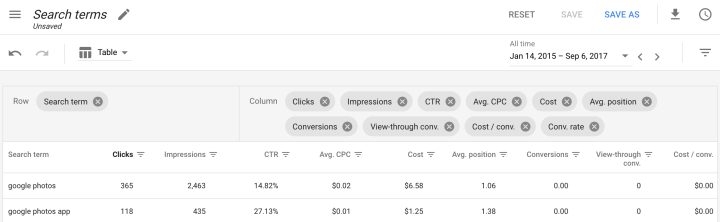
Earlier this Fall, Google made alterations to the search terms report in their Google Ads platform.
“We are updating the search terms report to only include terms that were searched by a significant number of users. As a result you may see fewer terms in your report going forward.”
Unfortunately, those alterations are providing advertisers with fewer user search queries than ever before.
Despite Google stating that they’re only eliminating terms that aren’t searched by a significant number of users, this still ultimately translates to less data for advertisers
This is concerning for affiliates because the search terms report has always provided valuable information that assists with campaign optimization.
It’s important to note that Google has never disclosed ALL search queries. They’ve always stated that many private or sensitive searches are not displayed in the search terms report. However, this recent change shifts the visible/hidden ratio.
This reduction in search term visibility is concerning for several reasons:
It makes it more difficult to analyze trends and discover common themes among low-click queries
Creating single-word ad groups becomes more challenging
It can lead to lower ad bidding which could translate to reduced conversion rates
If you’re unhappy about this change, your only real choice if you want to continue using the platform is to adapt. This is the case with most major ad platform modifications.
Google would not have made the change in the first place if they didn’t plan on keeping it in place.
What Should Affiliates Do?
Luckily for you, being an affiliate means you’re well equipped at adapting.
Here’s what we suggest you do if this change is affecting your Google Ads performance.
1. Utilize other Platforms
If you also use Microsoft/Bing ads to obtain search traffic, you can apply some of the information you gain in that platform’s search terms report to Google Ads.
There’s been no indication that Microsoft will be limiting search queries like Google. Running similar search term reports will provide you with search queries that can assist you in adding negative and positive keywords in your Google Ads campaigns.
2. Continue to Optimize
Although you may now have less data to utilize, it’s just as important as ever to use whatever you can to optimize your campaigns.
Keep in mind that the search data that Google will continue to show you is ultimately the most important. You’ll still be receiving substantial search data that you can use to determine how to improve.
2. Use Google’s Keyword Planner
You might already be using this tool, but if you’re not, doing so can assist you in combating reduced search term visibility.
It’s useful because it can help you research potential searches which you can use to further optimize your campaigns. This will provide you with additional insight which can assist you in your decision-making.
4. Explore other Traffic Sources
If you find that this change is hindering your ability to find success with search ads. This could be a good time to experiment with those other traffic sources you’ve been eyeing.
Whether you’re looking to get into email, display, native, or social, diversifying your affiliate skillset is always valuable if you plan on having a long career in affiliate marketing.
We use cookies on our website to give you the most relevant experience by remembering your preferences and repeat visits. By clicking “Accept”, you consent to the use of ALL the cookies.
This website uses cookies to improve your experience while you navigate through the website. Out of these, the cookies that are categorized as necessary are stored on your browser as they are essential for the working of basic functionalities of the website. We also use third-party cookies that help us analyze and understand how you use this website. These cookies will be stored in your browser only with your consent. You also have the option to opt-out of these cookies. But opting out of some of these cookies may affect your browsing experience.
Necessary cookies are absolutely essential for the website to function properly. These cookies ensure basic functionalities and security features of the website, anonymously.
Cookie
Duration
Description
cookielawinfo-checbox-analytics
11 months
This cookie is set by GDPR Cookie Consent plugin. The cookie is used to store the user consent for the cookies in the category "Analytics".
cookielawinfo-checbox-functional
11 months
The cookie is set by GDPR cookie consent to record the user consent for the cookies in the category "Functional".
cookielawinfo-checbox-others
11 months
This cookie is set by GDPR Cookie Consent plugin. The cookie is used to store the user consent for the cookies in the category "Other.
cookielawinfo-checkbox-necessary
11 months
This cookie is set by GDPR Cookie Consent plugin. The cookies is used to store the user consent for the cookies in the category "Necessary".
cookielawinfo-checkbox-performance
11 months
This cookie is set by GDPR Cookie Consent plugin. The cookie is used to store the user consent for the cookies in the category "Performance".
viewed_cookie_policy
11 months
The cookie is set by the GDPR Cookie Consent plugin and is used to store whether or not user has consented to the use of cookies. It does not store any personal data.
Functional cookies help to perform certain functionalities like sharing the content of the website on social media platforms, collect feedbacks, and other third-party features.
Performance cookies are used to understand and analyze the key performance indexes of the website which helps in delivering a better user experience for the visitors.
Analytical cookies are used to understand how visitors interact with the website. These cookies help provide information on metrics the number of visitors, bounce rate, traffic source, etc.
Advertisement cookies are used to provide visitors with relevant ads and marketing campaigns. These cookies track visitors across websites and collect information to provide customized ads.

 If 2020 has taught us anything, it’s that being versatile is important when it comes to succeeding as a digital marketer. That extends to compliance teams who must ensure financial […]