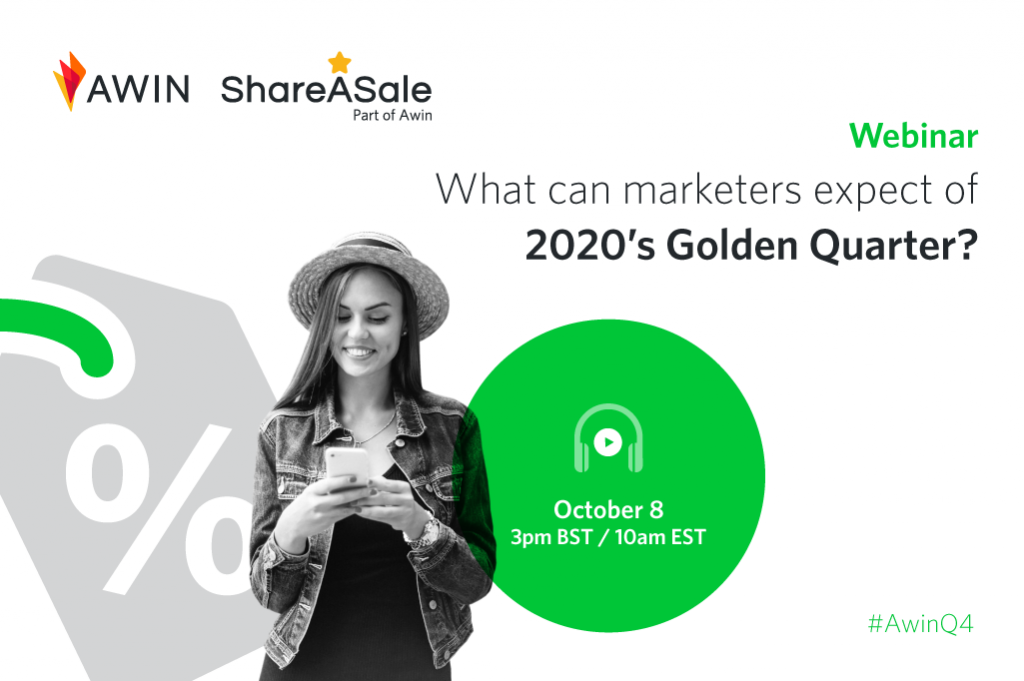
Join the Awin Group for our special webinar where we’ll discuss what the latest trends tell us about the forthcoming and crucial Q4 period.
To say Q4 is going to be important to retailers this year is the very definition of understatement. Even before the horrible year that 2020 delivered, the last quarter was well established as the ‘do or die’ time when sales targets were either smashed or squandered… Singles’ Day, Black Friday, Christmas and other local sales events all packed into one crucial sequence of months.
This year we can add to that mix the delayed launch of Amazon’s Prime Day (now in October), a second wave of the pandemic and accompanying lockdown restrictions, retailers with huge piles of unsold stock, and consumers in desperate need of discounts to make their money go further.
As we venture closer to this marketing minefield, Awin and ShareASale are hosting a special webinar dedicated to untangling the various obstacles and opportunities that Q4 offers our partners.
Join Awin Global Strategy Director Kevin Edwards and panel of industry experts to find out what we’ve learned from the year so far, and how it can help inform our e-commerce strategies for the all-important coming months.
Apple’s recent iOS 14 launch has re-fueled their ongoing tension with Facebook.
The tech giant’s newest operating system — which was released this month — will now give its users the ability to opt-out of apps tracking their online history and behaviour.
That sentence alone should tell you why Facebook is unhappy with this new feature. It simply makes their (and other big ad players’) advertising platform less effective by reducing targeting potential.
Hyper-targeted advertising is kind of Facebook’s MO.
However, from Apple’s standpoint this update to their technology makes a lot of sense.
Here is why.
They have always maintained that user privacy is one of their biggest priorities. For the most part, their actions have been consistent with that motto. Previously limiting ad targeting for Safari users is one such example.
In addition, online advertising has never been a significant part of their business. Therefore, preventing intrusive advertising tech from following their users’ every move aligns with their vision and initiatives.
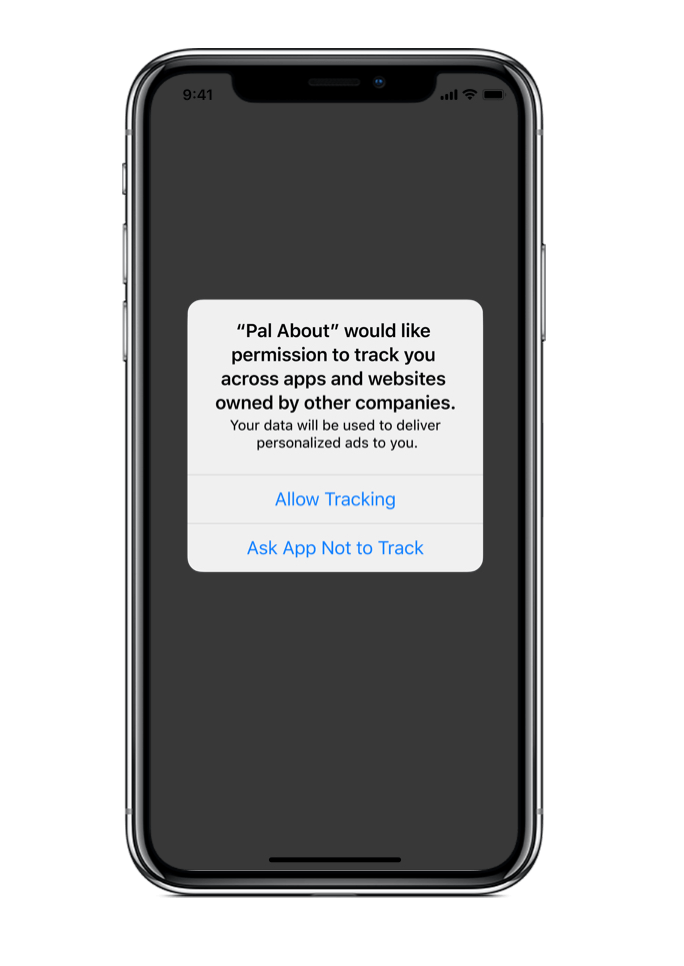
Here’s how this new feature will work.
Apple’s new iOS14 feature in action.
When users open an app on their iPhone, a pop-up will appear that will prompt them to select one of two options:
Allow Tracking
or
Ask App Not to Track
If an Apple user chooses “Allow Tracking”, then it will be status quo for them, app companies and advertisers. The latter two will still be able to utilize user behaviour data from inside the app and other online avenues to offer highly targeted advertising.
If a user chooses “Ask App Not to Track”, those companies will not be privy to their online behaviour and what actions they take when encountering their ads.
With online privacy becoming more and more of a hot topic among the general public, it’s hard to believe the majority of users would choose the former option.
The biggest takeaway here is that this could eventually impact the effectiveness of online advertising that targets those on Apple devices. Considering that makes up 45% of smartphone users in the US alone, that could have significant repercussions.
For affiliate marketers who utilize highly targeted advertising like Facebook Ads as a traffic source, this could mean a less lucrative future for the popular traffic source. However, this could be off set by a necessary decrease in ad costs on Facebook’s end.
This is obviously all dependent on how these companies react, comply, and adapt to this new iOS feature.
Earlier this month, Apple did announce that they will not be enforcing this new “rule” on app companies until early next year. This is to give those companies and advertisers some time to become compliant.
If Apple stands their ground with this update, which looks to be the case, Facebook and other ad platforms like Google will simply need to find a way to adapt. Keeping their ad profits up and those using their platforms happy will no doubt be priorities.
For affiliates, this just might become another obstacle they’ll need to overcome to in the future. Luckily, they have more experience than anyone at adapting to change.
We use cookies on our website to give you the most relevant experience by remembering your preferences and repeat visits. By clicking “Accept”, you consent to the use of ALL the cookies.
This website uses cookies to improve your experience while you navigate through the website. Out of these, the cookies that are categorized as necessary are stored on your browser as they are essential for the working of basic functionalities of the website. We also use third-party cookies that help us analyze and understand how you use this website. These cookies will be stored in your browser only with your consent. You also have the option to opt-out of these cookies. But opting out of some of these cookies may affect your browsing experience.
Necessary cookies are absolutely essential for the website to function properly. These cookies ensure basic functionalities and security features of the website, anonymously.
Cookie
Duration
Description
cookielawinfo-checbox-analytics
11 months
This cookie is set by GDPR Cookie Consent plugin. The cookie is used to store the user consent for the cookies in the category "Analytics".
cookielawinfo-checbox-functional
11 months
The cookie is set by GDPR cookie consent to record the user consent for the cookies in the category "Functional".
cookielawinfo-checbox-others
11 months
This cookie is set by GDPR Cookie Consent plugin. The cookie is used to store the user consent for the cookies in the category "Other.
cookielawinfo-checkbox-necessary
11 months
This cookie is set by GDPR Cookie Consent plugin. The cookies is used to store the user consent for the cookies in the category "Necessary".
cookielawinfo-checkbox-performance
11 months
This cookie is set by GDPR Cookie Consent plugin. The cookie is used to store the user consent for the cookies in the category "Performance".
viewed_cookie_policy
11 months
The cookie is set by the GDPR Cookie Consent plugin and is used to store whether or not user has consented to the use of cookies. It does not store any personal data.
Functional cookies help to perform certain functionalities like sharing the content of the website on social media platforms, collect feedbacks, and other third-party features.
Performance cookies are used to understand and analyze the key performance indexes of the website which helps in delivering a better user experience for the visitors.
Analytical cookies are used to understand how visitors interact with the website. These cookies help provide information on metrics the number of visitors, bounce rate, traffic source, etc.
Advertisement cookies are used to provide visitors with relevant ads and marketing campaigns. These cookies track visitors across websites and collect information to provide customized ads.