AI agents are becoming a new gatekeeper between brands and buyers, picking products by rules marketers don’t yet understand. Here’s what they need to know when navigating that shift.
Amazon keeps the toy aisle to itself
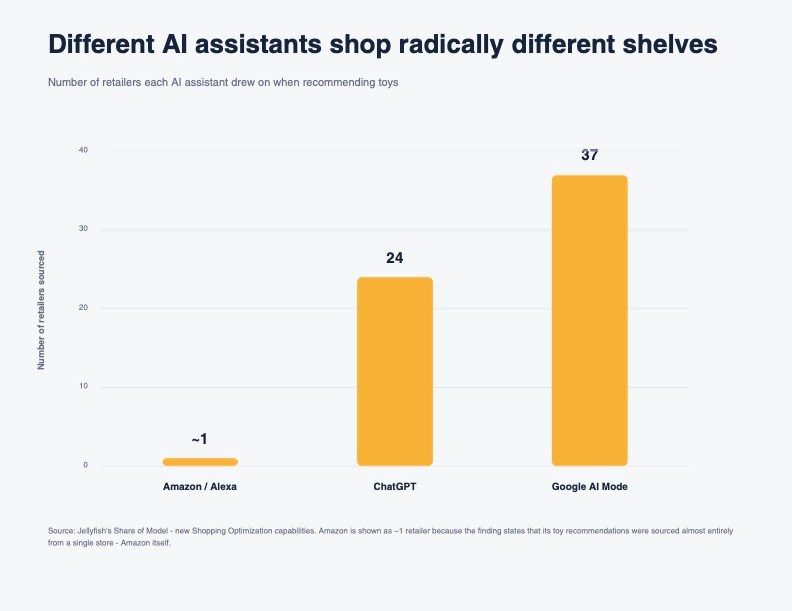
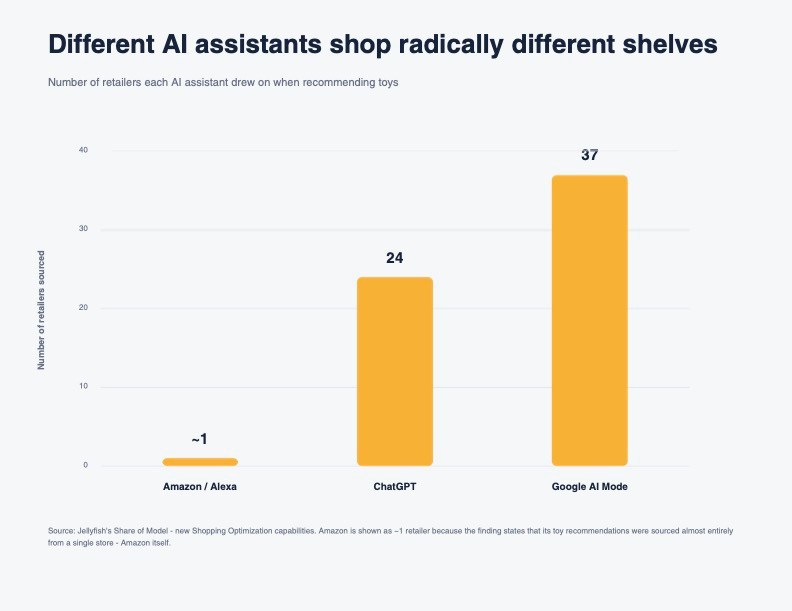
Alexa for Shopping showed toys from 177 brands when asked for recommendations and nearly every one of them came from Amazon’s own store. When the same request was asked of ChatGPT, the AI assistant recommended 24 retailers. Google’s AI Mode went to 37. AI visibility hinges on a brand being stocked in the stores each assistant is willing to look at, and which retailer lands the sale depends largely on which assistant the shopper happened to open. That’s the main takeaway from the analysis conducted by new shopping optimization capabilities within Jellyfish’s Share of Model tool, which tracked product recommendations from the three aforementioned assistants across eight categories in the U.S., U.K., Australia and Singapore.
Retailers get the biggest shelf space on Copilot
Of all the assistants, Microsoft’s Copilot cites retailers the most, according to Tinuiti. The agency tracked which e-commerce sites the assistants cited most often in answers to its prompts. In July, the top 100 made up 34% of Copilot’s citations. That’s more than triple their share on Google’s AI Mode and more than eight times their share on ChatGPT. Tinuti partly blames Reddit, which blocks Copilot’s crawlers and leaves more room for stores. Across all six assistants it tracked, retailers’ share slipped to 14% in July from $14 in Q2.
Continue reading this article on digiday.com. Sign up for Digiday newsletters to get the latest on media, marketing and the future of TV.